|
|
|
|
|
|
|
|


Permits Required to Beach Kayaks on Shore or at Captain Cook
As of 2/23/2010, the Department of Land and Natural Resources (DLNR) is requiring permits for anyone seeking to land vessels (kayaks) along the Ka‘awaloa shoreline or moor at the wharf adjacent to the Captain Cook Monument in Kealakekua bay. Find out details on how to apply for the permit in our Captain Cook Kayak Permit blog post. Download the Permit Application online here. For more information, contact the State Parks office in Hilo at (808) 974-6200.
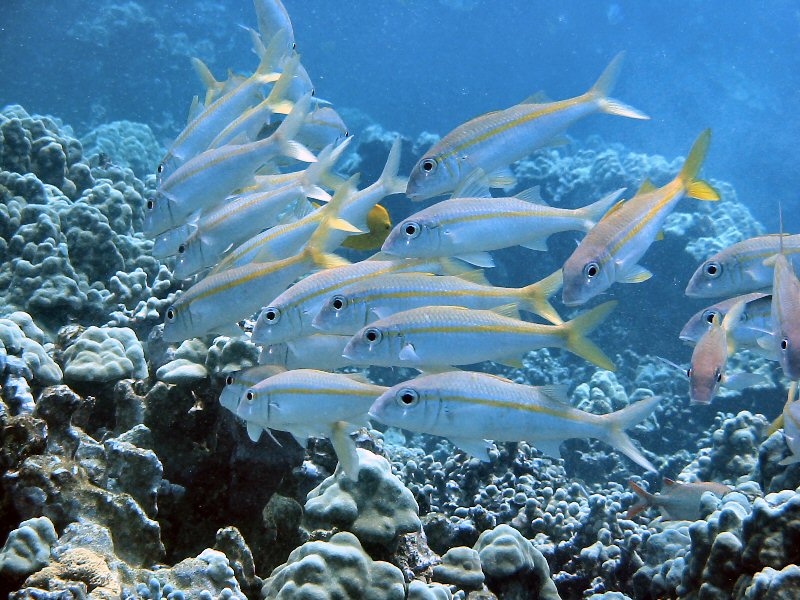 Want to know how to get to Captain Cook? Check out our main Captain Cook, Kealakekua Bay page for instructions on how to kayak across the bay. Kealakekua Bay was designated a Marine Life Conservation District (MLCD) in 1969 because of its abundance and rich diversity of marine life. The exceptionally clear water and the extensive thriving coral reef that extends to below 80 feet in depth makes this a premier SCUBA diving location.
 Captain Cook is located at the northern edge of the picturesque Kealakekua Bay. Expect to take a lot of photos and prepare yourself by bringing an underwater camera if possible. The water could not be clearer and the visibility is often reported beyond 100 feet.

Courtesy Google Maps
 If you are SCUBA diving, we recommend following the reef to the south, away from the monument (Route1 above). Either follow the drop-off down past 80 ft., or stay on top of the reef at about 30 ft. Either way, you will see an abundance of tropical coral and beautiful fish. Nevertheless, there is usually more sea life on top of the reef than down below the drop-off. We like to drop down alongside the wall as we follow this route to the south, then as we return, we will climb up and dive just above the reef, making a shallow return to the start.
 An alternate route - or if you are planning a second dive, is Route2 (see above) and follow the reef to the north as it curves around. This dive is a bit shallower and the reef is not as diverse or wide as the other direction, since most of it is in shallow (<20 feet) of water. This is also a good route to follow if you are a snorkeler - the water is shallow and visibility is fantastic.
Underwater Sea Life
 What will you see? Some of the best sea life in Hawaii! With the superb underwater visibility, you will see a vibrant coral reef the wraps around the cove and hundreds of colorful Hawaiian fish. You will see Hawaiian Green Sea Turtles, Parrot Fish,
  Trumpet Fish, large schools of Goat Fish, Squirrel Fish, Angel Fish, Crown of Thorns, Moray Eels, plenty of Trigger Fish, Butterfly Fish, Blue Tail Wrasse, and much more. In the shallow waters adjacent the monument, you may see the Hawaiian Green Sea Turtle.
The Crown of Thorns is a red or blue colored starfish with thorn-like spines sprouting all over its body. Crown-of-thorns starfish are found on coral reefs throughout the world, and you will see them in Hawaii and at Kealakekua Bay. As with most  underwater creatures, the spines protruding its backside are there for protection. If accidentally touched or stepped on by humans, the starfish’s long spines are capable of stinging, inflicting great pain, infection, and cause nausea and vomiting. Do not touch! Unfortunately, the Crown-of-Thorns is a predator, feasting on the coral polyps and destroying coral reefs. It climbs on top of the coral, attaches itself to it, and releases enzymes allowing it to digest the liquefied tissue.
Back to the main Captain Cook Page.
More Captain Cook Articles
Kayak to Captain Cook The best way to access the Captain Cook Monument and the sea life of the marine sanctuary is by kayak.
Snorkeling at Captain Cook Read our Capt. Cook snorkel guide with maps and photos
SCUBA Diving Captain Cook Read our Capt. Cook SCUBA diving guide with maps and photos
Kayak Tips and Advice Hot-to-kayak information, safety tips, gear guide
Hawaii Kayak Guide Guide to kayaking on the Big Island, kayak snorkeling, sea caves
|
|
|
|
|
|
|
|


|
Sea Turtle Video |
Sea Turtle Swimming Video |
Coral Head Video |