Sea Turtles at Kukio Beach Park, Kohala Coast
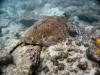 The green turtle is listed as endangered by the International Union for the Conservation of Nature. In 1978, the Hawaiian population of the green turtle was listed as threatened under the U.S. Endangered Species Act of 1973.Turtle enthusiasts are spreading the word about saving this threatened species from extinction. Sea turtles evolved 180 million years ago, long before the Hawaiian Islands were formed. For turtles, Hawai`i is a luckier home than some other places.
When Christopher Columbus sailed through the Caribbean in 1503, he saw so many green sea turtles that he named three islands Las Tortugas. He called the turtles the most valuable reptiles in the world, and they were soon exterminated for their shells and flesh as the western hemisphere was explored and exploited.
Green turtles were a source of food, tools, and ornamentation for early Hawaiians. With the arrival of western culture, however, the level of exploitation of this resource increased dramatically. Large numbers of green turtles were harvested throughout the Hawaiian Islands through the nineteenth and early twentieth centuries. In 1974, the State of Hawaii finally passed a regulation providing some protection, but this was virtually ignored until 1978, when the Hawaiian green turtle was placed on the list of threatened species.
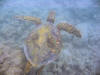
In other parts of the world, green turtles face a serious threat from the destruction and loss of nesting sites. Fortunately, over 90% of nesting activity for the Hawaiian green turtle population occurs at the French Frigate Shoals, inside a National Wildlife Refuge System administered by the U.S. Fish and Wildlife Service. This, combined with its threatened status under the U.S. Endangered Species Act, has created an environment in which the Hawaiian green turtle should prosper. Unfortunately, the Hawaiian green still faces severe threats, most notably fibropapilloma tumors and degradation of foraging habitat. Current Hawaiian green turtle population levels are still thought to be below pre-western contact, and probably pre-World War II levels as well. In 1992, the estimate of mature female green turtles associated with the French Frigate Shoals was set at roughly 750.
Take a Virtual Tour of a Hawaiian Coral Reef
Green Sea Turtles are Endangered
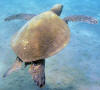 Green sea turtles, as well as other sea turtles in Hawaii, are fully protected under both the federal Endangered Species Act and under Hawaii state law. These laws prohibit hunting, injuring or harassing sea turtles or holding them in captivity without first obtaining a special permit for research or educational purposes. Swimmers and divers should be aware that riding sea turtles is illegal as it puts the animals under unnecessary stress. Fines for violating these laws protecting turtles can be as high as $100,000 and may even include some time in prison.
Under provisions in the Endangered Species Act, the National Marine Fisheries Service, the U.S. Fish and Wildlife Service and the State of Hawaii’s Department of Land and Natural Resources have recently formed a recovery team to help restore Hawaii’s green sea turtle population to previous levels. The goals of the recovery team are to identify research, management and enforcement needs for effective sea turtle conservation in the islands as well as promoting sea turtle protection through public education programs. Conservation websites such as this one help to spread the word and foster support.
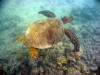 It is believed the green sea turtle reaches sexual maturity around 25 years and can live up to 80 years of age. Turtles return to where they were hatched to lay their eggs. Every second or third year, turtles migrate hundreds of miles to nest. Each female will lay two or three clutches of 100 to 110 eggs each before swimming back to its favorite resting and feeding area in the protected waters of the inshore reef. With a robust conservation program, we can see all Hawaiian Sea Turtles mature and live long lives.
Observe Hawaiian Green Sea Turtles
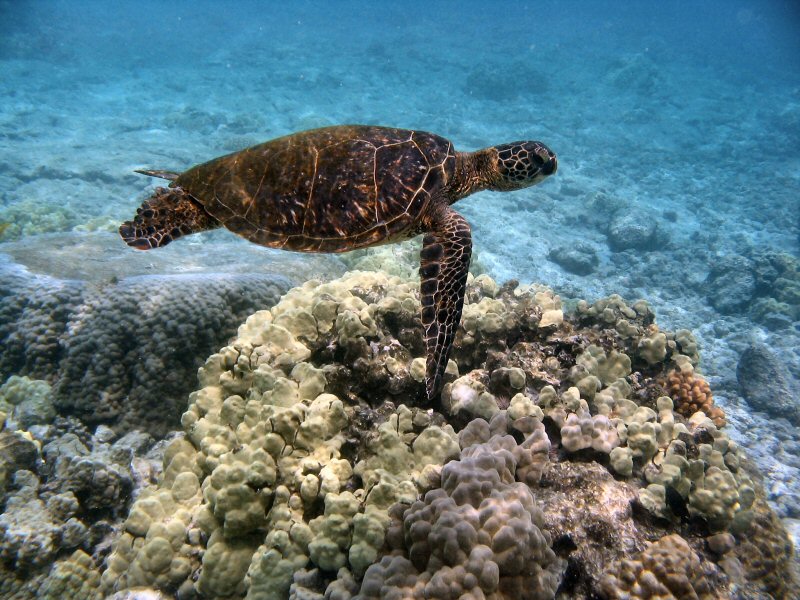 If you are interested in observing the Green Sea Turtle in the wild - visit the Big Island of Hawaii — you won’t be disappointed. On the Big Island you have a chance to sea the turtles in their natural land habitat as well as in the ocean - this is truly a unique opportunity.
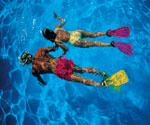
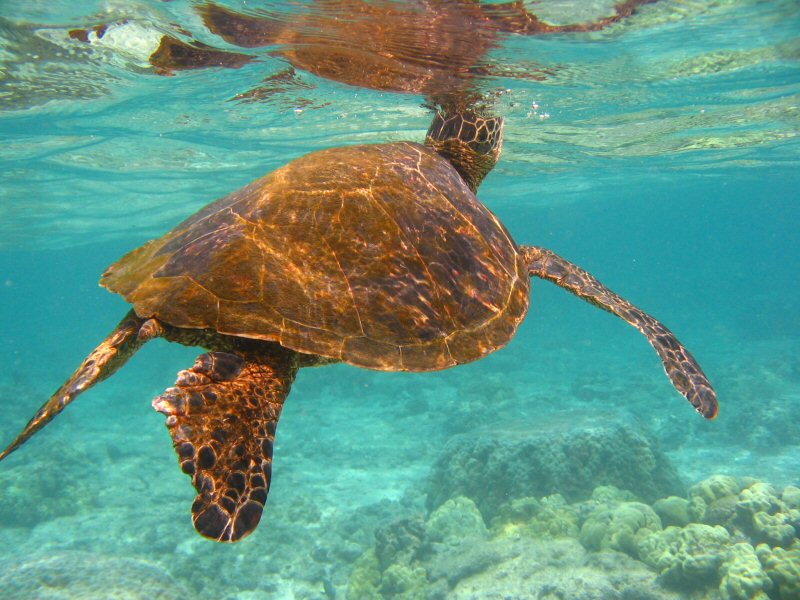 You can see the Hawaiian Sea Turtles (Honu) at virtually any Kona beach. If the waters are clear, you can snorkel or dive with them and enjoy a truly unique opportunity! Please do not disturb the turtles - do not touch them, do not chase them, do not scare them, do not get closer than 20-feet of them! Visit the following beaches and you are certain to see the green sea turtles - you may even be able to swim with them.
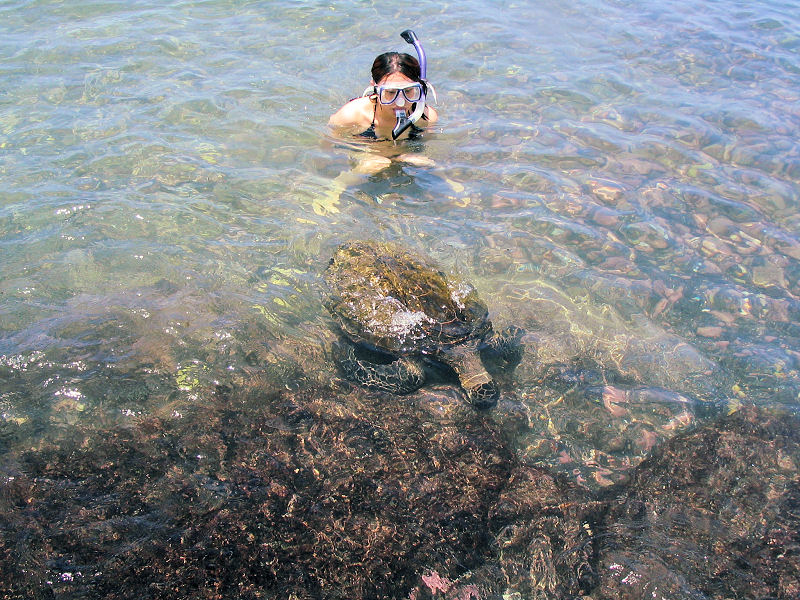 There are many opportunities to take photos of these beautiful creatures. You will often see them in the shallow waters over the lava rocks or near the sandy beach. The turtles here are very comfortable with people and swim alongside the swimmers and snorkelers - however, please do not touch or chase the turtles! Give them plenty of room to swim, and allow them to move freely and surface for air. Remember, the turtles are protected by law and it is illegal to touch any turtles!
Spencer Beach Park
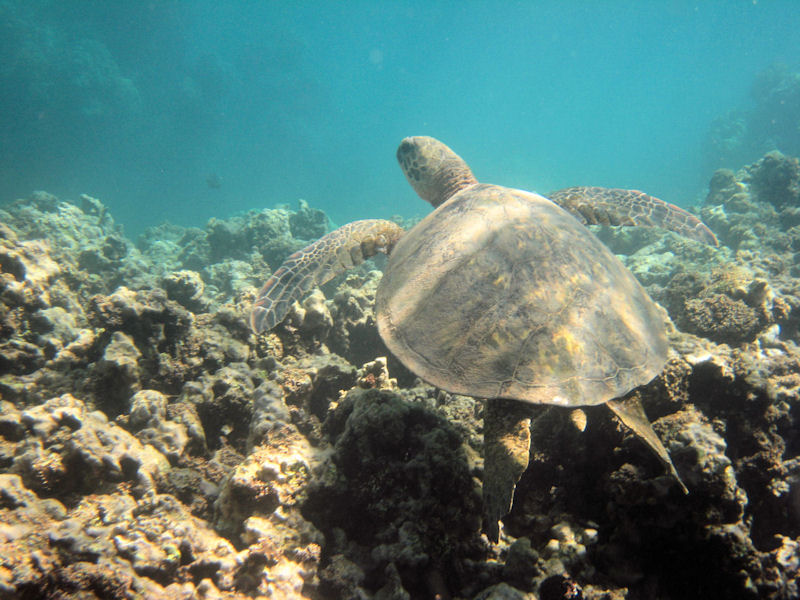 Also in Kohala, is Spencer Beach Park, another great place to snorkel with the turtles. At Spencer’s, snorkel to the North end of the bay, near the rocks, and you will find many sea turtles swimming in the shallow water.
Kahalu’u Beach Park
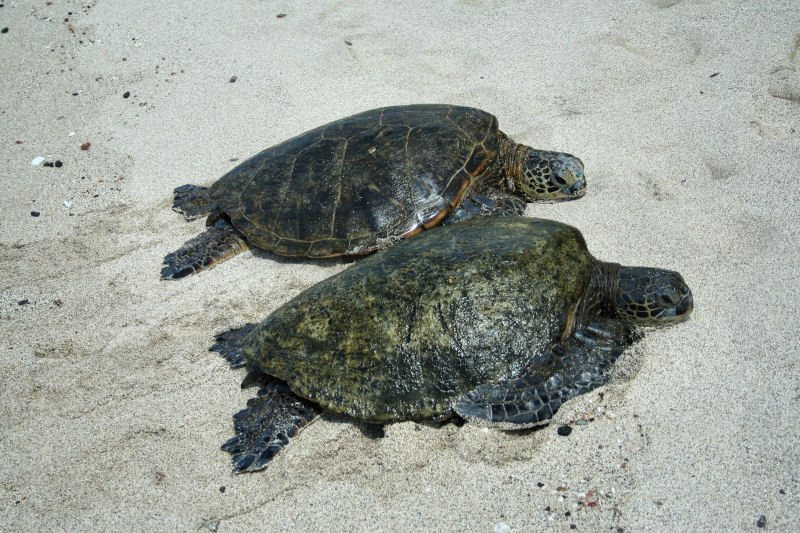
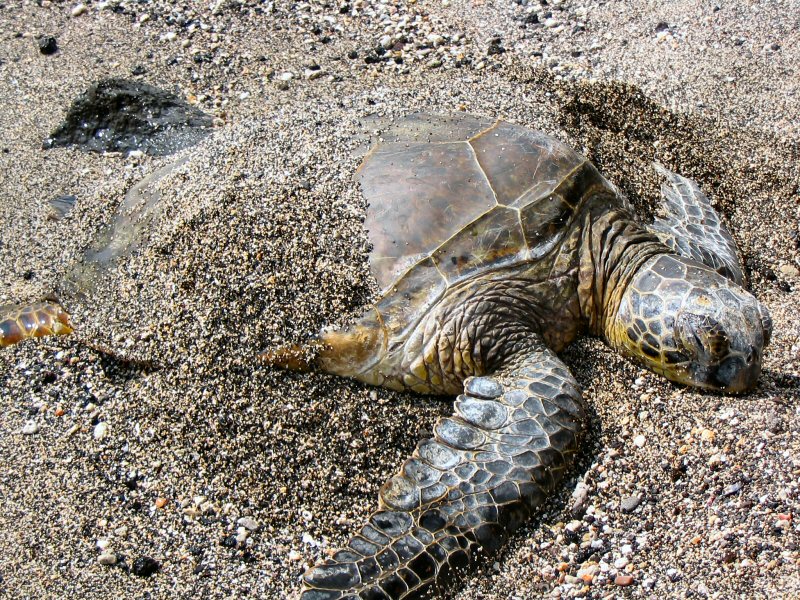 The photos on the right and below were taken of Hawaiian Green Sea Turtles at Kahaluu Beach Park, Kona. There are many turtles swimming in the protected waters of this cove. Additionally, the turtles crawl up onto the black sand beach and bury themselves in the sand to warm themselves.
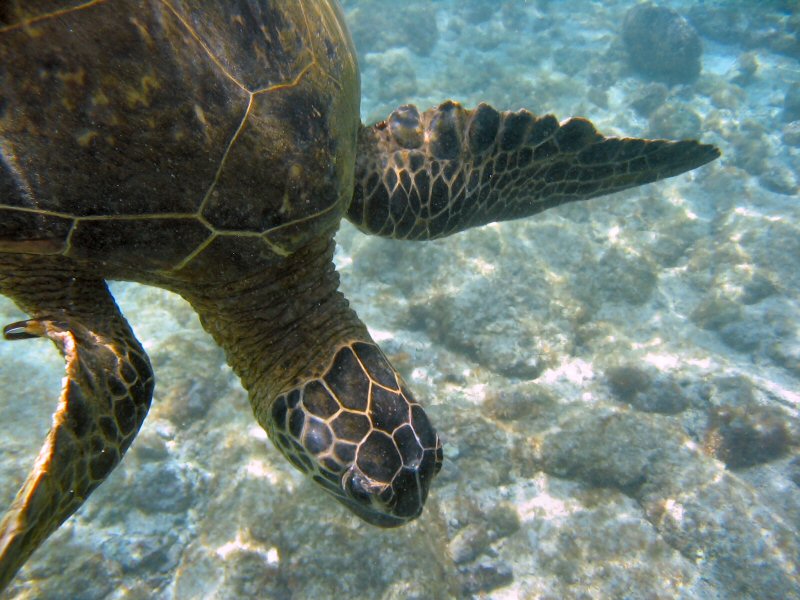 Many of the turtles are tagged for scientific reasons - as is the turtle in this photo. See the tag on his front right flipper. Such tags help scientists study the turtles, track their movements, and monitor their numbers.
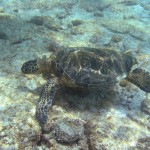
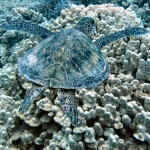
As a diver or snorkeler, another great place to swim with the turtles is at Place of Refuge, Honaunau in South Kona. The wonderfully vibrant coral reef here is also a large attraction.
On the Hilo side of the Island, if you are a SCUBA diver, Leleiwi Beach Park offers a wonderful dive with literally dozens of Green Sea Turtles - from young adolescent turtles to mature old ones — a great diving experience. We routinely see twenty to thirty turtles each dive here!
Punaluu Black Sand Beach
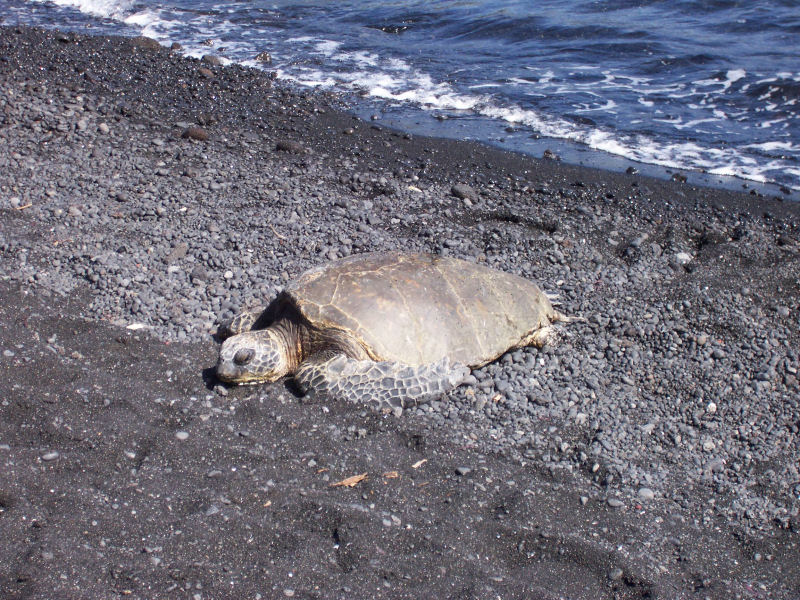 If you get a chance to visit the famous Punaluu Black Sand Beach, you can see many sea turtles. The turtles swim up onto the beautiful black sand beach, bask in the sun, and even nest on the beach. This is a wonderful place to photograph the turtles on land. The Big Island’s most famous black sand beach offers a chance to see turtles up close.
Kahuwai Bay
Another place on the Kona-side of the Big Island that you can observe many Hawaiian Green Sea Turtles is Kahuwai Bay, the beach at the Kona Village Resort. The turtles frequently crawl out of the waters and onto the white sand beaches here. Often, you will spot groups of turtles along the beach or even burying themselves in the sand at Kahuwai Bay. The four photos below were taken at Kahuwai Bay.
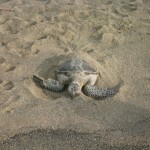
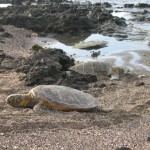
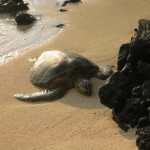
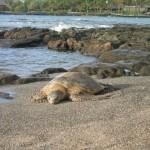
Kuki’o Beach
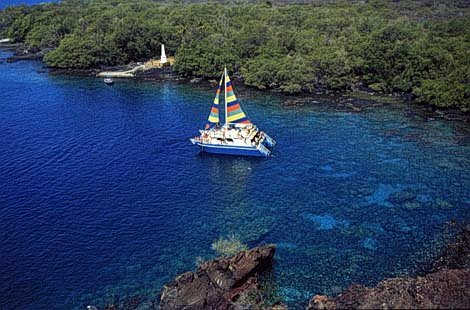
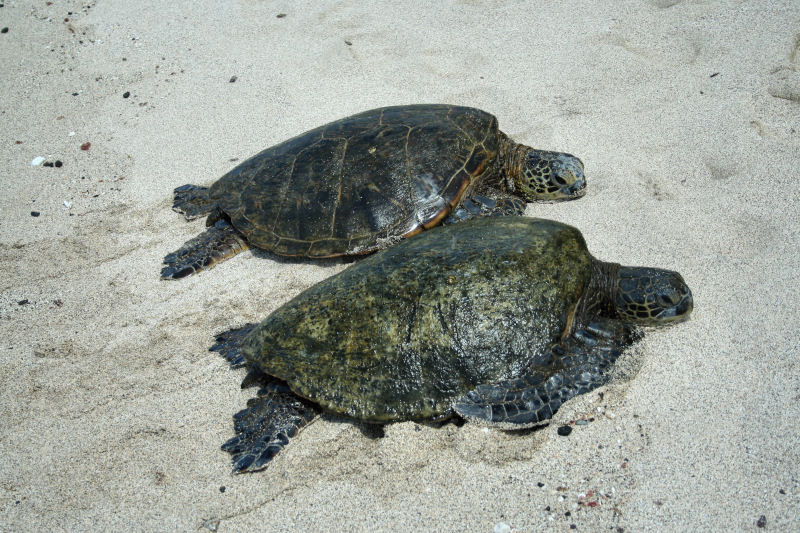 Kuki’o Beach is a beautiful white sand beach where you can view the turtles. There are a number of green sea turtles that swim in these waters and climb up onto the beach to bask in the sun.
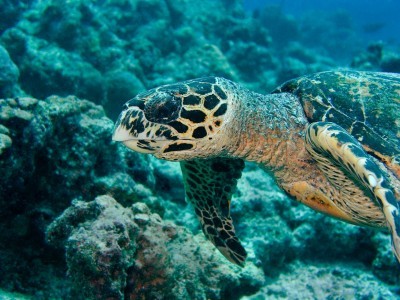
The green sea turtle, called Honu in Hawaiian, is featured in mythology, petroglyphs and as aumakua (personal family gods and guardians). The most common sea turtle in Hawaiian waters, the can frequently be seen feeding in shallow coastal shallow waters on the Big Island. It takes this turtle almost two decades to reach an adult breeding size of 200 pounds or more. Living up to eighty years they can reach up to 350 pounds.
Help Researchers
 You can help turtle researchers by reporting nesting, basking, injured, or dead sea turtles in Hawaii to the Hawaii State Department of Land and Natural Resources, Division of Aquatic Resources at (808) 243-5294 or the National Marine Fisheries Service in Honolulu at (808) 943-1221. Mistreatment, harassment, or killing of sea turtles should be reported to the Enforcement Division of the National Marine Fisheries Service at (808) 541-2727 or the State Conservation and Resources Enforcement Maui office at (808) 243-5414. For information on sea turtles call Pacific Whale Foundation, (808) 879-8860.